
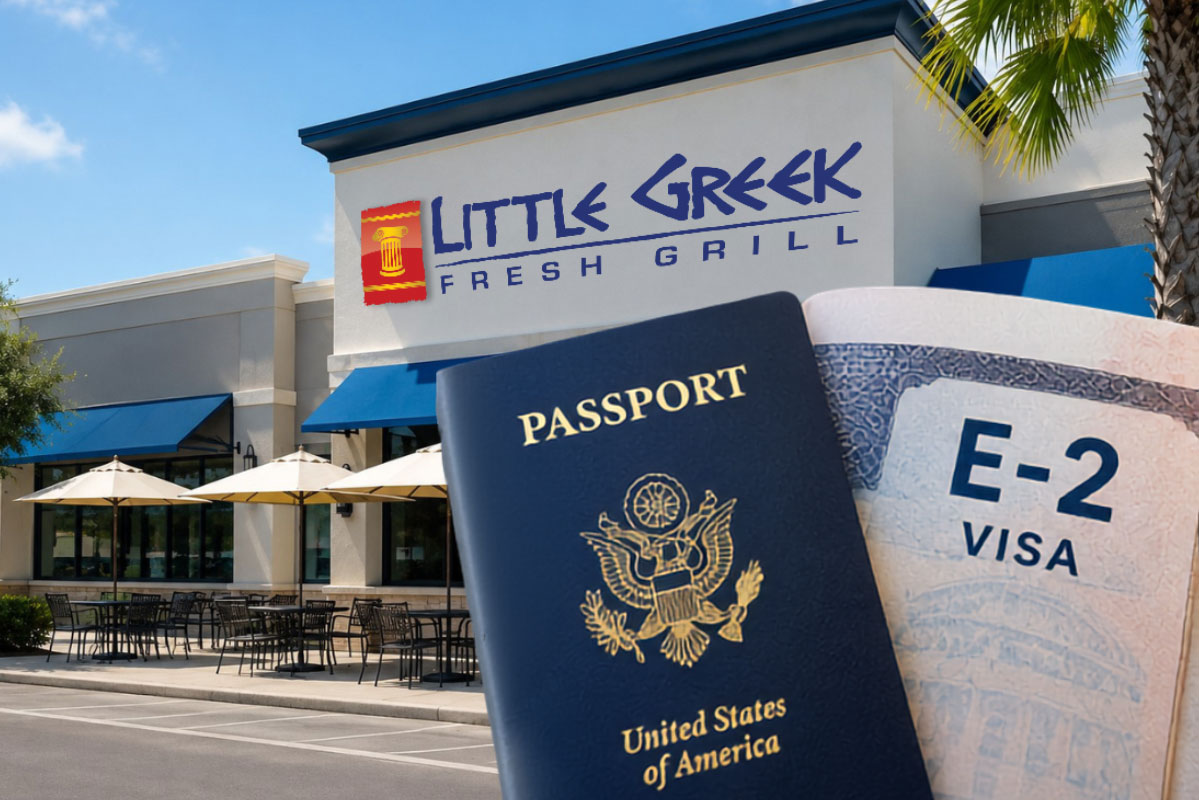
What Is the E-2 Treaty Investor Visa?
The E-2 is a nonimmigrant visa category for nationals of countries that maintain qualifying treaties of commerce and navigation, or otherwise qualify under U.S. law. The visa is designed for individuals who invest a substantial amount of capital in a real and operating U.S. enterprise and who will develop and direct that enterprise.
For a restaurant franchise owner, that can mean investing in a qualifying restaurant business and taking an active role in developing and managing the operation. The U.S. Department of State explains that the investment must be substantial in relation to the cost of the enterprise, the funds must be committed to the business, and the enterprise must be a real, operating commercial business rather than a passive investment.
Who May Qualify for an E-2 Visa?
The first consideration is nationality. The principal investor generally must be a national of a qualifying treaty country. The investment enterprise must also meet nationality requirements under the E-2 rules.
The investor must make a substantial investment in a U.S. business. There is not one universal dollar amount that automatically qualifies every E-2 investment. Instead, the investment is evaluated in relation to the total cost of the business and whether the capital is sufficient to support successful operation.
The investor must also be coming to the United States to develop and direct the enterprise. In practical terms, this means an E-2 investor is expected to have an active ownership or managerial role rather than simply placing money into a business and remaining uninvolved.
Finally, the enterprise cannot be considered marginal. The business should have the present or future capacity to generate more than enough income to provide only a minimal living for the investor and family, or otherwise make a significant economic contribution.
Why a Restaurant Franchise Can Be a Strong E-2 Business Option
Starting an independent restaurant requires developing a concept, creating operating procedures, building a brand, establishing vendor relationships, designing a menu, and developing a marketing strategy. A franchise can provide many of these components through an established business model.
For an E-2 investor, an established franchise system may also make it easier to build a comprehensive business plan around a defined concept. Site selection, training, restaurant design, operations, marketing, supply chain support, and brand standards can provide a framework for the investment and the business's planned operations.
Little Greek Fresh Grill is a fast-casual Mediterranean restaurant franchise with a menu built around fresh, flavorful food and made-to-order options. The South Florida franchise program offers support with site selection, lease negotiation, operational training, marketing, and restaurant setup. This support can be particularly valuable for an international entrepreneur who is learning the U.S. restaurant market while building a new business.
What Should an E-2 Investor Prepare?
A successful E-2 application requires more than showing that money is available. Investors should be prepared to document the source and path of their investment funds, ownership of the enterprise, business structure, purchase or franchise agreements, financial projections, operating plans, staffing expectations, and evidence that the investment is committed to the business.
A detailed business plan is especially important because it can demonstrate how the restaurant will operate, how it will generate revenue, how it will employ people, and how the investor intends to develop and direct the business.
The exact documentation and application process can vary depending on the investor's circumstances and where the application is submitted. Immigration counsel should guide the preparation of the application and supporting evidence.
How Little Greek Supports International Franchise Investors
Little Greek South Florida Franchising understands that international entrepreneurs may have questions about both franchise ownership and the E-2 process. The brand works with experienced immigration attorneys to help qualified prospective franchisees navigate the process.
The franchise team can also provide information about the business opportunity itself, including the franchise model, training, operational support, market development, and the steps involved in becoming a franchise partner.
Little Greek does not provide legal or immigration services, and working with the brand does not guarantee E-2 eligibility or approval. Those determinations are made by the appropriate U.S. government agencies and should be evaluated with qualified legal counsel.
Exploring Restaurant Franchise Ownership in South Florida
For an international entrepreneur, the E-2 visa may offer an opportunity to combine business ownership with the goal of operating a company in the United States. A restaurant franchise can provide an established framework while still allowing an owner to become deeply involved in the local community and day-to-day business.
South Florida is an especially compelling market for restaurant development, with diverse communities, strong consumer demand, and a vibrant dining culture. Little Greek is currently focused on strategic franchise growth throughout Miami-Dade, Broward, and Palm Beach counties.
If you are an international entrepreneur considering restaurant franchise ownership, the first step is to understand both sides of the opportunity: the franchise business itself and your individual immigration requirements. Speak with a qualified immigration attorney, evaluate the investment carefully, and learn more about whether Little Greek could be the right fit for your goals.
